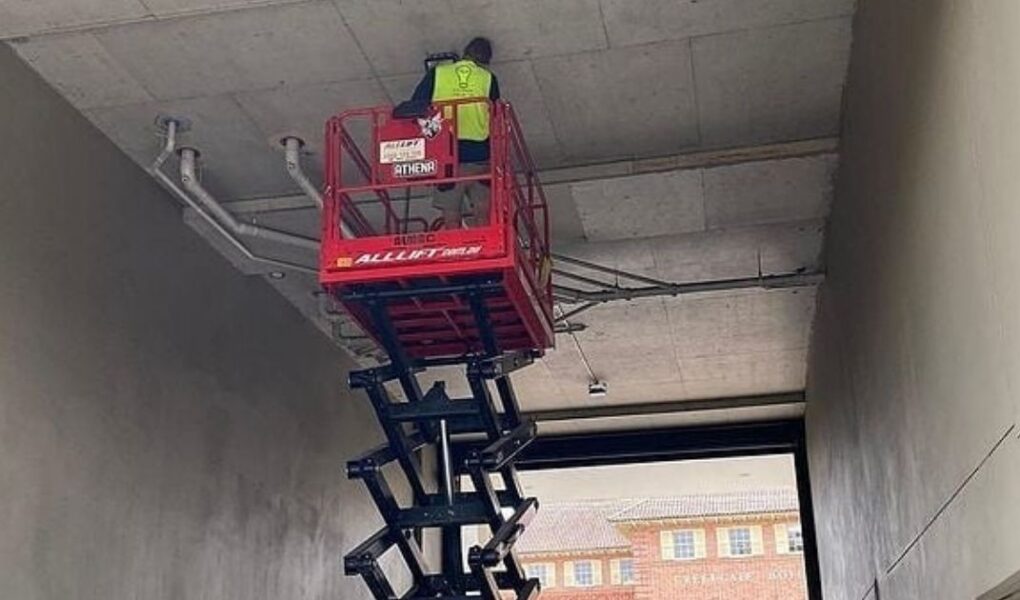
Terry stands in the car park of an industrial estate in Coventry, smoking a roll-up before the morning session begins. He is forty-two, made redundant from a logistics company six months ago. The scissor lift course he is taking today costs £300 he does not really have, borrowed from his brother-in-law. But without it, he cannot apply for the warehouse jobs that might keep his family housed.
“Used to be you could walk onto a site and they’d train you,” he says, stubbing out the cigarette. “Now you need papers for everything.”
This is the new reality of British industrial work. Certifications have become gatekeepers to employment, and the scissor lift course represents one small key to those gates. Across the country, thousands of workers like Terry queue up for training that promises access to jobs operating mobile elevated work platforms. Some will find work. Others will add another certificate to a growing stack of qualifications that lead nowhere.
But the training itself is real. The machinery is real. And the need for competence is undeniable.
Inside the Training Centre
The facility occupies a former factory unit. Concrete floors, high ceilings, and three scissor lifts arranged in a training area marked with traffic cones. Eight trainees gather for the morning briefing. Ages range from twenty-one to fifty-six. Two women, six men. Some are here through JobCentre schemes. Others paid out of pocket.
The instructor is Dave, fifty-something, with hands that show decades of manual work. He does not waste time on pleasantries.
“This course will teach you how to operate these machines safely and legally,” he begins. “That is all. It will not get you a job. It will give you the certification required to apply for work that requires scissor lift operation.”
His honesty is striking. Most training providers oversell their programmes. Dave simply lays out the facts.
What the Course Covers
A scissor lift course follows a standardised curriculum mandated by organisations like the International Powered Access Federation. The content divides between classroom theory and practical operation.
Theory components include:
- Health and Safety at Work Act 1974 and equipment regulations under PUWER
- Understanding different scissor lift types: electric, diesel, indoor, rough terrain models
- Load capacity calculations that account for personnel, tools, and materials
- Hazard identification including overhead obstacles, ground conditions, and weather limitations
- Pre-operational inspection procedures checking hydraulics, tyres, controls, and emergency systems
The classroom session runs two hours. Dave projects slides but spends most of the time talking through real incidents. Falls. Tip-overs. Electrocutions from overhead power lines. His delivery is matter-of-fact but the message lands.
After lunch, the practical training begins.
Learning to Rise
Sarah goes first. Twenty-six years old, recently finished a forklift course, hoping to transition from retail into warehouse work. She approaches the electric scissor lift cautiously, performs the walk-around inspection Dave demonstrated, then climbs onto the platform.
“Check your emergency descent system,” Dave calls out. “Locate it now before you raise the platform.”
Sarah finds the manual descent valve, acknowledges, then activates the controls. The scissor mechanism unfolds with a hydraulic hum, raising the platform steadily upward. At three metres she stops, practises basic movements, then elevates to full height.
From the ground, Dave watches her positioning. “Wind affects you more the higher you go,” he explains to the waiting group.
Each trainee takes turns. Forward and reverse travel. Precise positioning exercises. Emergency stops. Dave corrects mistakes immediately. When one trainee tries to drive at full elevation, Dave hits the emergency kill switch.
“Read the manufacturer’s plate,” he says firmly. “Maximum travel height is clearly stated. Ignore it and you risk a tip-over.”
The afternoon progresses through increasingly complex scenarios. Navigating tight spaces. Operating near overhead obstructions. Performing the emergency descent procedure.
The Assessment
By late afternoon, each trainee faces individual assessment. Theory test first, then practical demonstration. The theory exam covers regulations, equipment knowledge, and safety procedures. Pass mark is eighty percent.
Terry finishes the written test, moves to the practical component. He performs the pre-use inspection methodically, climbs aboard, and executes the required manoeuvres. Dave watches in silence, making notes.
“Satisfactory,” Dave finally says. “You will receive your IPAF certification card within ten working days.”
Terry nods, allows himself a brief smile. One more certificate. One more chance at employment.
What Happens After Certification
The scissor lift course concludes with certificates issued but futures uncertain. Dave hands out the completion paperwork and offers final advice.
“This certification is valid for five years but most employers want recent experience,” he tells the group. “If you do not use these skills regularly, they deteriorate.”
Some trainees already have job interviews lined up, positions contingent on certification. Others face the harder task of competing against experienced operators. The certificate opens doors but does not guarantee they will open easily.
Sarah plans to register with multiple agencies, hoping scissor lift certification combined with her forklift licence makes her more employable. Terry will update his CV tonight, start applying tomorrow. Both understand the arithmetic: more qualifications increase odds but guarantee nothing.
The Economics of Access
Training costs money. Certificate fees, travel expenses, time away from job searching or temporary work. For people already struggling financially, these barriers are substantial. Yet without certification, entire categories of employment remain inaccessible.
The scissor lift course represents one small example of how modern work operates. Skills matter less than credentials. Experience counts, but only after you gain entry. And entry requires money upfront, a burden that falls hardest on those with least.
Outside, trainees disperse to bus stops and car parks. Another day spent acquiring qualifications in an economy where qualifications multiply but secure employment remains elusive. The scissor lifts sit silent in the training bay, waiting for tomorrow’s group.
The machinery does not judge. It simply requires competent operation. Everything else exists in the world beyond the factory gates.