
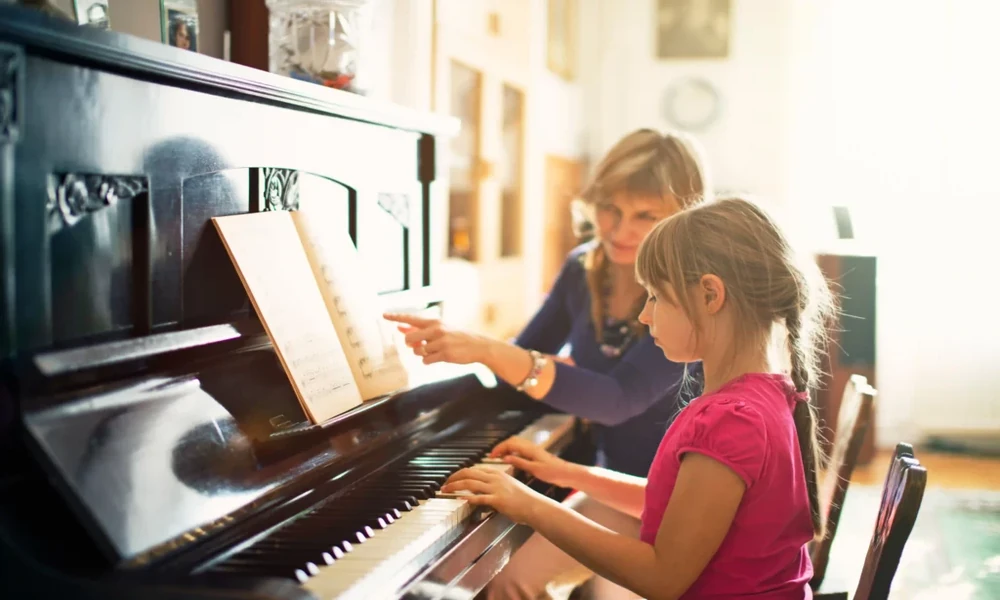
Parents often measure piano progress by technical benchmarks: which pieces a child can play, which grade they have reached, how many scales they know. For many children, the more lasting outcome of piano lessons kids attend regularly has less to do with technical mastery and more to do with the confidence built through visible, repeatable achievement, the experience of practising something difficult until it becomes easy. Judging progress purely by repertoire difficulty misses this entirely, and can even undermine it by pushing a child toward material that outpaces what actually builds genuine confidence.
Why Confidence, Not Just Technique, Is the Real Outcome
A child who plays a simple piece confidently and well has gained something a child who stumbles through a harder piece has not, even if the harder piece looks more impressive on paper. The specific skill of practising something repeatedly until it improves, and noticing that improvement, transfers well beyond music into schoolwork and other pursuits, which is why many parents value the lessons even after a child stops playing seriously. A teacher who understands this will sometimes deliberately hold a child back on repertoire difficulty to let mastery, and the confidence that comes with it, catch up first.
Small Wins Matter More Than Big Repertoire
Mastering a short, simple piece fully, to the point of playing it from memory without hesitation, builds more genuine confidence than partially learning something more advanced and never quite finishing it. Teachers who structure lessons around a sequence of small, completable goals, rather than constantly pushing toward the next difficulty tier, give children more frequent moments of visible success to build on, and those moments accumulate into a much steadier sense of capability than a single impressive but unfinished piece ever could.
Performance Anxiety and How Good Teachers Handle It
Some children freeze up the moment they are asked to play for anyone beyond their regular teacher, even on material they know well at home. A teacher who treats this as a technical problem to solve, through low-stakes practice performances for a parent or a peer before any formal recital, addresses the anxiety directly rather than hoping it resolves on its own. Structured exposure to performing in front of others in gradually larger settings is what actually reduces this over time.
The Role of Recitals in Building Stage Comfort
A recital, even an informal one, gives a child a concrete deadline to prepare toward and a real audience to play for, both of which build a different kind of confidence than lesson-only practice. The goal is not a flawless performance but repeated, manageable exposure to the experience of playing under mild pressure, which becomes less daunting each time it happens.
Why Some Children Quit Despite Good Progress
A child can be improving steadily by every technical measure and still quit, usually because the lessons have stopped feeling like an achievement and started feeling like an obligation. This often traces back to material that is too difficult for genuine mastery, constant comparison to more advanced peers, or praise that has become so routine it no longer registers as meaningful.
Praise That Actually Builds Confidence Versus Empty Praise
General praise like good job after every piece, regardless of how it was actually played, teaches a child to discount feedback rather than trust it. Specific praise, naming exactly what improved since last time, whether that is a steadier tempo or a cleaner transition between hands, is what a child can actually internalise as evidence of real progress.
Parent Involvement Without Pressure
A parent who sits in on practice to encourage rather than to correct technique they do not fully understand supports confidence far more effectively than one who critiques every mistake. The most useful parental role is usually just consistent, low-pressure presence and interest, leaving the technical correction to the teacher who is actually trained to give it.
Setting Goals a Child Can Feel Proud Of
A goal like play this piece without stopping is more motivating and more achievable for a young child than an abstract goal like get better at piano, because it has a clear, checkable endpoint the child can recognise themselves without needing an adult to confirm it. Teachers who set this kind of specific, self-evident goal give children a way to measure their own progress.
Comparing Siblings and Classmates Undermines the Whole Point
Mentioning how quickly an older sibling or a classmate progressed, even lightly, tends to reframe a child’s own achievement as falling short by comparison rather than as an achievement in its own right. Confidence is built against a child’s own earlier attempts, not against anyone else’s timeline, and teachers who track individual progress rather than a fixed cohort pace protect this distinction far more reliably.
When Confidence Dips Are Normal, Not a Warning Sign
Every child learning piano lessons kids benefit from goes through stretches where a new technical hurdle temporarily knocks their confidence, and this is a normal part of learning rather than a sign something has gone wrong. Distinguishing a temporary dip tied to a specific new challenge from a sustained loss of interest is the judgment call that matters most, and it usually resolves on its own once the current hurdle is cleared.